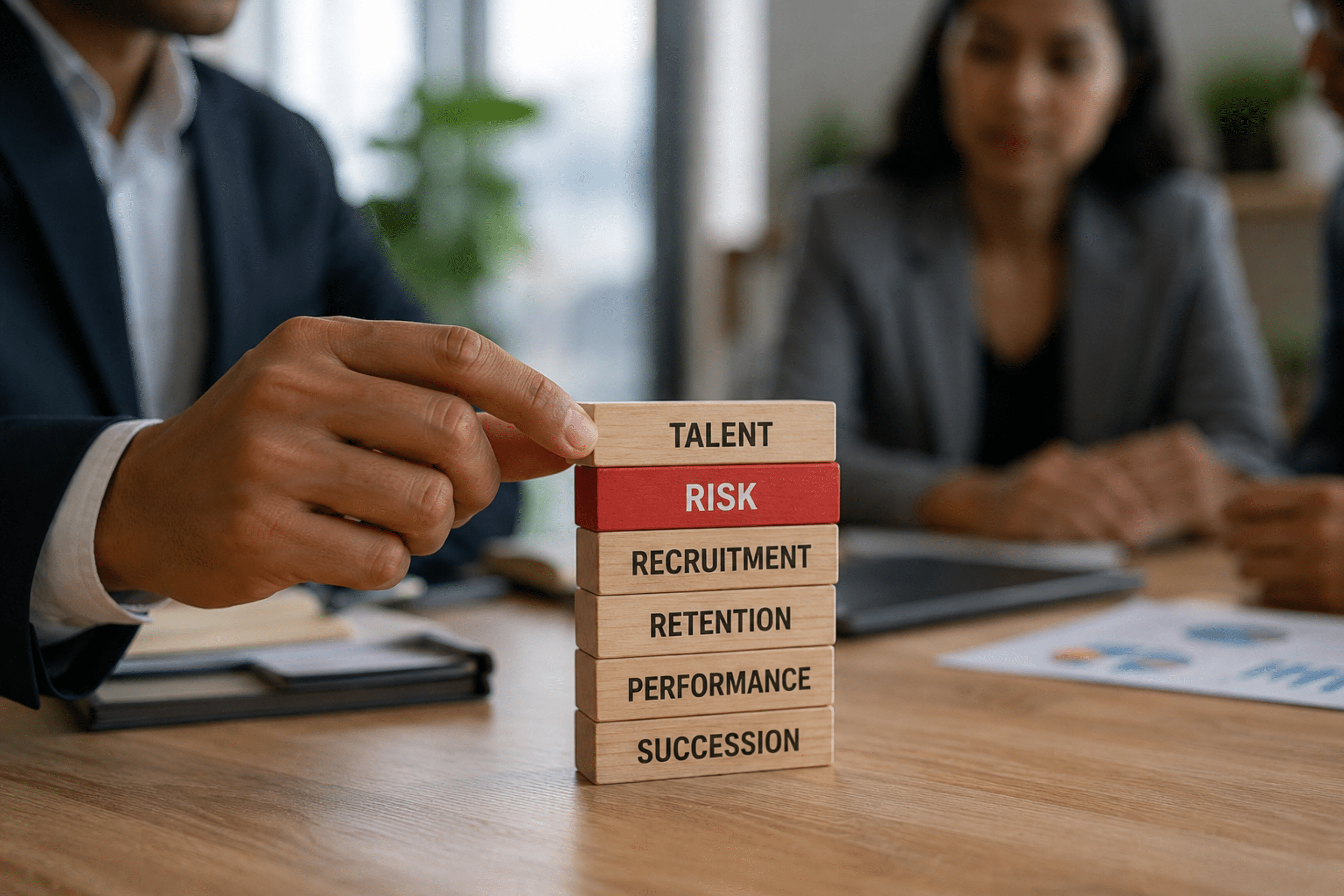
Organizations spend significant time discussing market competition, financial performance, customer acquisition, and operational efficiency. Yet one of the most serious threats to business growth often receives far less attention: talent risk.
A company can have a strong product, healthy cash flow, and ambitious growth plans, but if it lacks the right people to execute its strategy, progress can quickly stall. Critical positions remain vacant, high-performing employees leave, leadership pipelines dry up, and skills become outdated. The result is slower growth, reduced productivity, increased costs, and greater business vulnerability.
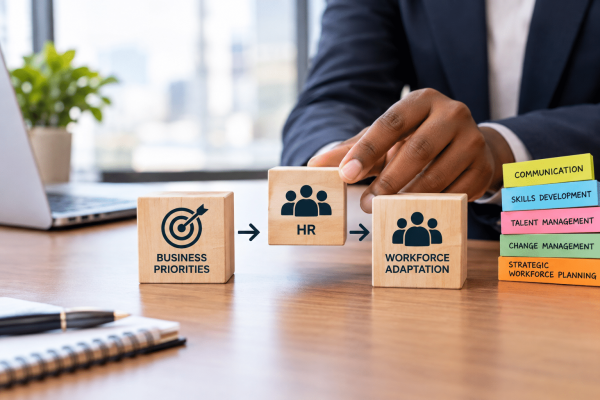
Talent risk management is no longer just an HR responsibility. It has become a business priority.
Organizations that proactively identify and manage workforce-related risks are better equipped to adapt to change, maintain continuity, and achieve sustainable growth. Those that ignore talent risks often find themselves reacting to crises rather than preventing them.
In this article, we’ll explore what talent risk is, why it matters, the various forms it takes, and practical strategies organizations can use to build a resilient workforce.
What Is Talent Risk?
Talent risk refers to the possibility that workforce-related issues could negatively impact an organization’s ability to achieve its objectives.
These risks can arise from:
- Inability to attract qualified talent
- High employee turnover
- Skills shortages
- Leadership gaps
- Poor workforce planning
- Compliance failures
- Inadequate succession planning
Simply put, talent risk exists whenever there is a gap between the people an organization needs and the people it currently has.
Why Businesses Often Overlook Talent Risk
Many organizations focus on talent challenges only after they become visible problems.
For example:
- A key executive resigns unexpectedly.
- A critical project is delayed due to staffing shortages.
- Employee turnover reaches unsustainable levels.
- Essential skills become obsolete.
By the time these issues appear, the damage may already be affecting productivity, customer satisfaction, and profitability.
Talent risks are often less visible than financial or operational risks, making them easy to underestimate. However, their impact can be equally severe.
The Connection Between Talent and Business Continuity
Business continuity depends heavily on people.
Technology systems can be replaced. Processes can be redesigned. Equipment can be upgraded.
Institutional knowledge, leadership capability, and specialized expertise are much harder to replace.
Consider a manufacturing company where the only engineer capable of operating a critical production system resigns. Even if a replacement is hired quickly, productivity may decline for months while knowledge transfer and training take place.
Talent risk management helps organizations reduce such vulnerabilities before they become business disruptions.
Types of Talent Risks Organizations Face
Talent risks come in various forms. Understanding these categories is the first step toward effective workforce risk management.
Talent Acquisition Risks
Hiring challenges continue to affect organizations across industries and regions.
Skills Shortages
Many organizations struggle to find candidates with the technical, managerial, and specialized skills they require.
Common areas experiencing shortages include:
- Technology and digital skills
- Healthcare professionals
- Engineering expertise
- Data analytics
- Cybersecurity
As industries evolve, demand for specialized skills often outpaces supply.
Hard-to-Fill Positions
Certain roles remain vacant for extended periods due to:
- Limited talent pools
- Competitive labor markets
- Geographic constraints
- Unrealistic hiring requirements
Vacant positions can increase workload pressures on existing employees and slow organizational growth.
Ineffective Hiring Processes
Lengthy recruitment cycles, poor candidate experiences, and weak employer branding can significantly increase talent acquisition risks.
Organizations that fail to optimize hiring processes often lose top candidates to competitors.
Retention Risks
Attracting talent is only half the challenge. Retaining valuable employees is equally important.
High Employee Turnover
Excessive turnover creates numerous challenges, including:
- Increased recruitment costs
- Knowledge loss
- Reduced team morale
- Operational disruption
Research consistently shows that replacing employees can cost anywhere from 50% to 200% of their annual salary depending on the role and level of specialization.
Loss of High Performers
When top performers leave, organizations lose more than headcount.
They lose:
- Institutional knowledge
- Customer relationships
- Leadership potential
- Innovation capacity
High-performing employees often contribute disproportionately to organizational success.
Leadership Exits
Executive departures create strategic uncertainty and can significantly impact business performance.
Without proper succession planning, organizations may struggle to maintain momentum during leadership transitions.
Capability Risks
Capability risks occur when workforce skills no longer align with business requirements.
Skills Gaps
Rapid technological advancement means today’s skills may not meet tomorrow’s demands.
Organizations commonly encounter gaps in:
- Digital literacy
- Data analysis
- Project management
- Strategic leadership
- Emerging technologies
Regular skills assessments help identify these gaps before they become critical.
Outdated Competencies
Employees may possess skills that were valuable in the past but no longer support organizational goals.
Businesses that fail to invest in upskilling risk falling behind competitors.
Lack of Succession Planning
Many organizations rely heavily on a few experienced individuals without preparing future successors.
When these employees leave, operational and leadership gaps emerge.
Effective succession planning reduces dependency on specific individuals and strengthens organizational resilience.
Compliance Risks
Talent-related compliance issues can expose organizations to significant financial and reputational consequences.
Workforce Policy Violations
Examples include:
- Inconsistent disciplinary procedures
- Workplace harassment claims
- Improper employee classification
- Policy enforcement failures
These issues can damage employee trust and organizational reputation.
Employment Law Exposure
Organizations operating across multiple jurisdictions face increasing complexity regarding:
- Labor regulations
- Data privacy requirements
- Diversity and inclusion mandates
- Workplace safety obligations
Failure to comply can result in legal disputes, penalties, and reputational harm.
Warning Signs of Talent Risk
Talent risks rarely appear without warning. Organizations that monitor workforce indicators can often identify problems early.
High Turnover Rates
Persistent employee turnover may indicate:
- Poor management practices
- Limited career growth opportunities
- Compensation concerns
- Cultural issues
Monitoring turnover trends by department, role, and tenure can reveal underlying problems.
Difficulty Attracting Quality Candidates
Organizations may face talent acquisition risks if they experience:
- Declining application volumes
- Low offer acceptance rates
- Extended hiring timelines
- Poor employer reputation
These indicators suggest potential weaknesses in recruitment strategy or employer branding.
Leadership Dependency
Ask yourself:
What would happen if a key leader resigned tomorrow?
If critical business functions depend heavily on a small number of individuals, the organization faces significant talent risk.
Low Employee Engagement
Disengaged employees are more likely to:
- Underperform
- Leave the organization
- Influence team morale negatively
Common warning signs include:
- Reduced productivity
- Increased absenteeism
- Low participation in company initiatives
- Negative employee feedback
Employee engagement surveys can provide valuable early-warning signals.
Limited Internal Mobility
Organizations with few internal promotions often struggle to build future leaders.
A lack of career progression opportunities can increase both retention and succession risks.
How Talent Risk Impacts Business Performance
Many organizations underestimate the financial consequences of talent-related challenges.
The impact extends far beyond HR metrics.
Revenue Loss
Vacant positions, leadership gaps, and skills shortages can directly affect revenue generation.
For example:
- Sales roles remain unfilled.
- Customer projects are delayed.
- Growth initiatives lose momentum.
Every vacant critical role represents a potential revenue opportunity lost.
Reduced Productivity
When organizations operate with insufficient talent, existing employees often absorb additional responsibilities.
This can lead to:
- Burnout
- Lower quality output
- Reduced efficiency
- Increased errors
Productivity losses often compound over time.
Customer Service Disruption
Customer experience is heavily influenced by employee performance.
Talent shortages can result in:
- Longer response times
- Service inconsistencies
- Reduced customer satisfaction
- Increased customer churn
Customers rarely distinguish between operational issues and workforce challenges. They simply experience poorer service.
Increased Recruitment Costs
Reactive hiring tends to be more expensive than proactive workforce planning.
Organizations may incur costs through:
- Recruitment agencies
- Advertising campaigns
- Signing bonuses
- Overtime expenses
- Temporary staffing solutions
Managing talent risk proactively helps reduce these avoidable expenses.
Slower Innovation
Innovation depends on people.
When organizations lose skilled employees or fail to develop new capabilities, their ability to innovate diminishes.
This can affect:
- Product development
- Market expansion
- Digital transformation
- Competitive positioning
Long-term growth often suffers as a result.
Practical Talent Risk Mitigation Strategies
Managing talent risk requires a proactive and systematic approach.
Here are some of the most effective strategies.
1. Invest in Strategic Workforce Planning
Workforce planning aligns talent needs with business objectives.
Organizations should regularly assess:
- Current workforce capabilities
- Future skill requirements
- Retirement risks
- Growth projections
- Workforce demographics
Effective workforce planning enables leaders to anticipate talent shortages before they occur.
Best Practice
Develop workforce forecasts covering 12, 24, and 36-month periods to identify future talent gaps.
2. Build Strong Succession Plans
Succession planning ensures business continuity when key employees leave.
A robust succession plan should:
- Identify critical positions
- Assess potential successors
- Create development pathways
- Monitor readiness levels
Organizations with strong succession pipelines are better positioned to navigate leadership transitions.
Key Question
For every critical role, can you identify at least one ready-now successor?
If not, succession risk may be higher than expected.
3. Develop Talent Pipelines
Waiting until vacancies arise often leads to rushed hiring decisions.
Instead, organizations should cultivate talent pipelines through:
- Graduate programs
- Internship partnerships
- Professional networks
- Industry associations
- Employer branding initiatives
A strong talent pipeline reduces recruitment risk and shortens hiring timelines.
4. Prioritize Leadership Development
Leadership capability remains one of the most important drivers of organizational success.
Leadership development programs should focus on:
- Strategic thinking
- Decision-making
- Emotional intelligence
- Change management
- Coaching skills
Developing leaders internally reduces dependence on external hiring and strengthens succession readiness.
5. Strengthen Employee Retention
Retention strategies are among the most cost-effective talent risk mitigation tools.
Organizations should focus on:
Career Development
Employees are more likely to stay when they see opportunities for growth.
Offer:
- Learning programs
- Mentorship initiatives
- Leadership pathways
- Cross-functional projects
Recognition and Reward
Recognition contributes significantly to employee engagement.
Effective approaches include:
- Performance-based rewards
- Public recognition
- Career advancement opportunities
Flexible Work Arrangements
Workplace flexibility continues to influence employee attraction and retention decisions.
Organizations that adapt to evolving workforce expectations often experience stronger retention outcomes.
6. Conduct Regular Skills Gap Analysis
Skills requirements change rapidly.
Organizations should periodically evaluate:
- Current competencies
- Future capability needs
- Training priorities
- Workforce readiness
This enables targeted learning and development investments.
7. Strengthen Employer Branding
A strong employer brand reduces recruitment risk by attracting high-quality candidates.
Organizations should communicate:
- Company culture
- Employee value proposition
- Career opportunities
- Development programs
- Success stories
Candidates increasingly evaluate employers in the same way consumers evaluate brands.
Building a Talent Risk Management Framework
Talent risk management should not be a one-time exercise.
It requires an ongoing framework that supports continuous improvement.
Step 1: Assessment
Begin by identifying workforce-related risks.
Evaluate:
- Critical roles
- Turnover trends
- Skills shortages
- Leadership vulnerabilities
- Compliance exposure
Risk assessments should involve both HR and business leaders.
Step 2: Monitoring
Track key workforce metrics regularly.
Examples include:
- Turnover rate
- Time-to-fill positions
- Employee engagement scores
- Internal promotion rates
- Succession readiness
- Skills gap indicators
Dashboards can help leaders monitor emerging risks in real time.
Step 3: Response Planning
Once risks are identified, establish mitigation strategies.
For each major risk:
- Define ownership
- Set timelines
- Allocate resources
- Establish success measures
Prepared organizations respond faster and more effectively when challenges arise.
Step 4: Continuous Improvement
Business environments change constantly.
Talent risk management frameworks should be reviewed and updated regularly.
Questions to ask include:
- Have workforce priorities changed?
- Are new skills emerging?
- Have retention risks increased?
- Are succession plans still valid?
Continuous evaluation ensures workforce strategies remain aligned with business goals.
The Future of Talent Risk Management
Several emerging trends are reshaping how organizations approach talent risk.
These include:
- Increased workforce mobility
- AI-driven workforce planning
- Skills-based hiring
- Remote and hybrid work models
- Growing demand for leadership agility
- Accelerated digital transformation
Organizations that embrace these trends proactively will be better positioned to manage future workforce challenges.
The future belongs to businesses that view talent as a strategic asset rather than an operational resource.
Frequently Asked Questions (FAQs)
Talent risk management is the process of identifying, assessing, monitoring, and mitigating workforce-related risks that could impact an organization’s performance, growth, or business continuity.
It helps organizations prevent disruptions caused by employee turnover, skills shortages, leadership gaps, and workforce compliance issues while supporting sustainable business growth.
Common talent risks include high employee turnover, skills shortages, succession planning gaps, recruitment challenges, leadership dependency, and compliance-related issues.
Organizations can reduce talent risk through workforce planning, succession planning, leadership development, employee retention initiatives, skills development programs, and proactive talent acquisition strategies.
HR plays a central role by identifying workforce risks, implementing mitigation strategies, supporting leadership development, monitoring workforce metrics, and aligning talent strategies with business objectives
The Strategic Imperative of Managing Talent Risk
Talent-related challenges rarely appear overnight. They develop gradually through turnover trends, leadership vulnerabilities, skills shortages, disengagement, and workforce planning gaps. Organizations that ignore these warning signs often face significant business disruptions when critical talent issues eventually surface.
Effective talent risk management enables organizations to move from reactive problem-solving to proactive workforce strategy. By identifying potential risks early, strengthening succession pipelines, investing in leadership development, and building robust retention strategies, businesses can protect their most valuable asset their people.
Growth is not determined solely by market opportunities or financial resources. It is ultimately driven by an organization’s ability to attract, develop, and retain the talent needed to execute its vision.
Ready to strengthen your workforce resilience?
Schedule a Workforce Planning Consultation to identify talent vulnerabilities, build stronger succession pipelines, and create a future-ready workforce strategy.